


Reflection Coefficient Calculator
Enter Load Impedance and Characteristic Impedance to calculate Reflection Coefficient.
- Ohm
- Ohm
Result
- Reflection Coefficient
What is Reflection Coefficient?
The Reflection Coefficient (Γ) is a fundamental parameter in transmission line theory and RF engineering that describes how much of an incident electromagnetic signal is reflected back toward the source when it encounters an impedance mismatch at the load. It is a dimensionless quantity that represents the ratio of the reflected wave amplitude to the incident wave amplitude on a transmission line.
In practical RF and high-frequency systems, signals travel along transmission lines such as coaxial cables, microstrip traces, waveguides, or stripline structures. These lines are designed with a specific characteristic impedance (Z₀), commonly 50 Ω or 75 Ω, depending on the application. When the signal reaches the load or termination, the load impedance (ZL) must ideally match the characteristic impedance of the line.
If ZL = Z₀, the transmission line is perfectly matched, and the signal energy is fully absorbed by the load with no reflections. However, if the impedances do not match, part of the signal is reflected back toward the source. This reflected signal interferes with the incoming signal, creating standing waves, signal distortion, and potential power losses.
The reflection coefficient provides a quantitative measure of this mismatch and is widely used in RF design, microwave engineering, antenna systems, and high-speed digital circuits to evaluate signal integrity and impedance matching.
The value of the reflection coefficient ranges between −1 and +1:
- Γ = 0 → Perfect impedance match (no reflection)
- Γ = +1 → Total reflection with the same phase (open circuit)
- Γ = −1 → Total reflection with phase reversal (short circuit)
Understanding and controlling the reflection coefficient is essential for achieving efficient signal transmission and minimizing unwanted electromagnetic interference.
Uses of Reflection Coefficient
Reflection coefficient calculations are widely used in RF engineering and high-frequency electronic design to evaluate impedance mismatches and improve system performance.
Some of the primary uses include:
Transmission Line Analysis
Impedance Matching
Antenna Design and Testing
RF and Microwave Circuit Design
Signal Integrity in High-Speed Digital Systems
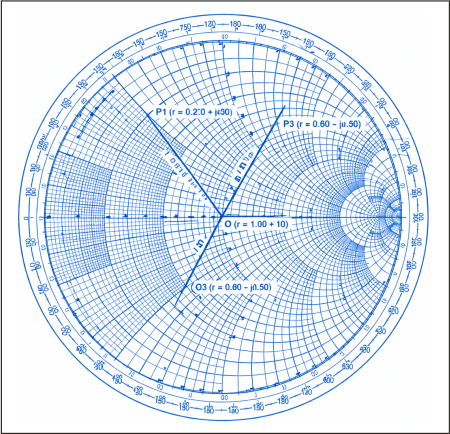
Reflection Coefficient Calculation
Reflection coefficient calculation evaluates the relationship between the load impedance (ZL) and the characteristic impedance (Z₀) of the transmission line. By comparing these two parameters, engineers can determine how much of the incident signal will be reflected back toward the source.
Key parameters involved in the calculation include:
- Load Impedance (ZL): The impedance of the connected device or circuit at the end of the transmission line.
- Characteristic Impedance (Z₀): The inherent impedance of the transmission line determined by its geometry and dielectric properties.
- Reflection Coefficient (Γ): The ratio of reflected voltage wave to incident voltage wave.
When the load impedance differs significantly from the characteristic impedance, the reflection coefficient increases, indicating a larger amount of reflected signal energy.
Reflection Coefficient Equation:
Γ = (ZL − Z0) / (ZL + Z0)
Where:
- Γ = Reflection coefficient (unitless)
- ZL = Load impedance (ohms)
- Z₀ = Characteristic impedance of the transmission line (ohms)
This equation determines the proportion of the signal that is reflected due to impedance mismatch. The magnitude of the reflection coefficient indicates the severity of the mismatch, while its sign indicates the phase relationship between the incident and reflected signals.
Engineers often use this calculation together with related parameters such as Voltage Standing Wave Ratio (VSWR), Return Loss, and S-parameters to evaluate system performance in RF and microwave circuits.
Applications in Electromagnetic Compatibility (EMC)
Reflection coefficient plays a significant role in electromagnetic compatibility (EMC) because impedance mismatches can cause signal reflections that generate unwanted electromagnetic emissions and interference.
Proper impedance matching and reflection analysis help ensure that electronic systems operate without causing or suffering from electromagnetic disturbances.
1. Reducing Signal Reflections
2. Minimizing Electromagnetic Interference (EMI)
3. Improving EMC Compliance
4. Enhancing Antenna and RF System Performance
5. Ensuring Reliable High-Frequency Operation
Related Calculators
Other Calculators
- Field Strength Calculator
- Required Amplifier Power for Desired Field Strength
- Amps to dBm Calculator
- Antenna Factor Calculator
- Antenna Near Field & Far Field Distance Calculator
- dBµV/m to V/m Calculator
- Far Field Distance Calculator for Horn Antennas
- Received Field Intensity Calculator
- Received Power Density Calculator
- Required Antenna Gain for Desired Field Strength
Login to EMC Directory to download datasheets, white papers and more content.

Create an account on EMC Directory to get a range of benefits.
 Please wait...